divendres, 25 de desembre del 2015

Dr. Nogués conference


Last Tuesday, as part of an educational project, we attended a conference about neurology and behaviour. It is important to specify that the speaker was Dr. Nogués, an eminence in the field now retired. Before explaining in detail what was discussed  during this conference we must say that it was a pleasure to hear him speak about something he knew so well.

First of all he detailed the different parts of the brain. It was only a little part of the conference since the last pretended to focus in conductual issues rather than anatomical ones. Regarding the structure of the brain from that other point of view he said that we can distinguish 4 different levels, and he proceeded on talking about each one.

The deeper one, or most primary, is the one responsible for receiving the external information, transporting that information to the brain and carrying back the response towards any part of the body. It is identified with the nervous system, central and peripherical, in general. It is clear that this level is shared with most of the animals.
The second one controls the most basic and involuntary reactions in our body, and it is obviously common with the animals as well. An example of such unconscious activities is the beating of the heart or the swallowing. Anatomically speaking, this second level of the nervous system is controlled by the brainstem.

After these two levels of activity comes what is known as the central pulse system. It is far more complex than the previous ones and includes a huge variety of hormones. This level generates and controls the five basic instincts that most superior animals have which are: hunger, territoriality, fear, agressivity and reproduction. Such instincts are essential for any living organism if it is to survive, as an individual but also as an specie. Despite being more sophisticated in many aspects, as it will be seen next, humans also have this level and many of our daily activities are ultimately driven by the mentioned instincts. These are controlled by the hypothalamus and the pituitary.
Finally, there is a 4th and last level known as the limb if system. It is by far the most complex of them all and it hasn't been completely understood yet. This part of the brain is the one responsible for feelings and emotions.It is controlled by the hippocampus and the animals have it as well, although smaller.

Apart from the mentioned levels there are other parts of the brain not included in this classification but also important such as the cortex. This section, which is found in the most external part of the brain, controls the reasoning and the logic, and it is almost exclusive of the human specie.

Dr. Nogués also explained that the brain is composed by to hemispheres, the right and the left. They have different functions and are attributed opposed characteristics. While the right one is said to be the "hippy" part of the brain, where feelings dominate the reasoning, the left one is exactly the contrary and rationality rules there. Due to this fact, many curious situations have aroused throughout the history whenever one of them has been damaged in somebody. This originated problems such as complete irresponsibility and permanent happiness (when the damaged area was the left hemisphere) or people with very mild emotions, almost robots. Apart from this, though, having the brain organised this way allows us to pay attention at different things simultaneously.

As a summary it can be said that the conference was incredibly profitable. In fact, we are preparing a very interesting document which we will post soon in this blog. We hope you have learned at least a part of what we learned during the act. If you have any question, you can ask it in the comment section below.


dilluns, 21 de desembre del 2015

Notícia setmanal: CRISPR

Avui us portem una notícia força destacada. Es tracta d’un descobriment que, diuen els experts, pot suposar un canvi en la manera de fer recerca genètica actualment. I és que de fet no podem dir que sigui un nou medicament, que acostumen a tenir una gran repercussió mediàtica, sinó un avenç del mateix calibre però els beneficis del qual afecten només a la comunitat científica, almenys a curt termini. És hora, però, de desvelar aquest descobriment i introduir-lo abans del cos de la notícia en sí per tal que aquesta sigui més fàcil d’entendre.

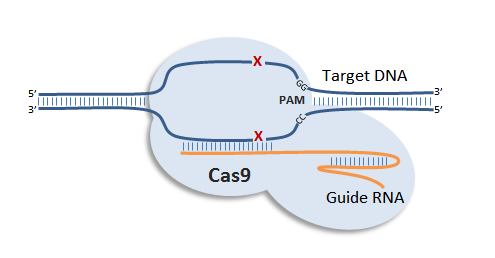
Aquest avenç és ni més ni menys que un nou mètode per aïllar i editar ADN de manera més fàcil, barat i, en general, eficient. Aquest nou procediment porta per nom CRISPR (ja veureu en l’article el perquè) i permet dur a terme de manera molt ràpida processos que anteriorment podien tardar bastant temps. Els detalls més tècnics els podreu trobar així mateix a la notícia a aquells a qui us interessi o en tingueu coneixements.

A un nivell més general, i com passa sempre que hi ha avenços en el camp de la genètica, ja s’han alçat veus crítiques que temen per les conseqüències que poden tenir aquests. Des del punt de vista estrictament objectiu cal dir que és comprensible que discussions d’aquest tipus s’originin ja que la biotecnologia, com qualssevol altre eina potent, pot ser usada per objectius equivocats i causar efectes devastadors. Així doncs, és raonable demanar que es regulin legalment els usos que aquesta disciplina de la ciència pot tenir. Fins aquí la valoració “políticament correcta”. En el nostre grup, tanmateix, tenim opinions molt clares al respecte que no entren en conflicte amb les expressades anteriorment  però sí que les matisen. A partir d’aquest punt tot el que llegeixin és de collita pròpia i si volen fer alguna aportació al respecte ho poden fer lliurament (de manera, demanem, constructiva) a la secció de comentaris. Creiem que les protestes i opinions crítiques que han sorgit fins al moment tenen més a veure amb les finalitats que poden donar-se al mètode que no pas amb el mètode en sí. No tan sols això sinó que ens atrevim a dir que tenen més relació amb la modificació genètica  en general i no tant, altre cop, amb aquest nou procediment. Com s’ha comentat anteriorment totes les branques de la ciència tenen un gran potencial tant pel bé com pel mal. Així doncs, nosaltres no creiem que s’hagi de criticar aquest descobriment; al cap hi ha la fi “només” perfecciona un procediment preexistent. Com hem dit aquesta és la nostra opinió i agrairem les seves intervencions com una manera de comprendre altres punts de vista.

Fins aquí la notícia de la setmana, reprendrem la notícia setmanal després de Nadal. A continuació us deixem l’enllaç a l’article en sí:  


dimecres, 9 de desembre del 2015

Rare blood types

Once more, we bring you a document related with the blood. It has not been easy to find certain information, but through emails to the Banc de Sang i Teixits we've managed to obtain it. If you have any doubt, you can leave it in the comments or write an email to such instituition, they will help for sure. We hope you learn something new with this school work:
 

dimarts, 8 de desembre del 2015

Two blood proteins related to cancer

We bring you a new publication related to the blood. This time, it has to do with two blood proteins related with cancer. We hope you enjoy the our work and, if you do, we have good news: another publication regarding the rare blood types will be published soon. As always, please leave any suggestion on the comments section below:

Segon pòster mèdic

Tal com vàrem anunciar, aquí us portem el segon poster mèdic dels casos pràctics treballats a classe. Aquesta vegada es tracta d'un treball sobre el càncer de pulmó. Com sempre, esperem que us agradi, que aprengueu i que ens comenteu si teniu alguna proposta de millora:

Primer pòster mèdic

Us portem un pòster del primer cas pràctic mèdic que varem treballar a classe. Esperem que aprengueu tant com nosaltres en fer-lo i siusplau comenteu si creieu que es pot millorar d'alguna manera:

divendres, 4 de desembre del 2015

La notícia que pot revolucionar la cardiologia

Científics del Centre Nacional d'Investigacions Cardiovasculars (CNIC) han fet una troballa realment impressionant: els mateixos greixos que inclouen les dietes que són una de les causes més importants d'un infart són capaços de prolongar la vida i de millorar la insuficiència cardíaca. 

Sí això és cert, pacients amb malalties com la miocardiopatia dilatada (que causa insuficiència cardiaca i en molts casos produeix la mort prematura) podrien ser curats.

Aquesta afirmació, que va totalment en contra del que pensem, ha estat postulada després d'uns experiments fets en ratolins, els quals tenien miocardiopatia dilatada. Se'ls va provar d'alimentar amb àcids grassos considerats com a "dolents" i els investigadors van comprovar que els petits mamífers, sorprenentment, no desenvolupaven insuficiència cadiaca i va allargar-se la seva vida.

Ara posaran en marxa l'experiment amb deu pacients voluntaris humans, els quals seran alimentats amb bacon, oli d'oliva i fruits secs. 

Aquí un enllaç amb més informació: http://www.abc.es/salud/enfermedades/abci-dieta-rica-grasa-puede-buena-para-corazon-enfermo-201512032023_noticia.html


dijous, 3 de desembre del 2015

Sang artificial: impossible o futura realitat?

Us portem novament una notícia. Aquest cop, aprofitant que penjarem noves entrades relacionades amb el tema, volem explicar-vos-en una relacionada amb la sang. De fet no es tracta d'una notícia en el sentit estricte de la paraula ja que no és una novetat. Tot i així creiem que la rellevància de la informació és suficient com per incloure-la en aquesta secció. Per la mateixa raó els links que trobareu, com sempre, a baix de tot de l'entrada corresponen a diferents pàgines que ens han semblat adecuades i no tant sols a una sola notícia. Les webs, avisem, són en anglès.

A mode d'introducció us explicarem de què tracten exactament cada una de les pàgines linkades. En resum parlen de la recerca en el camp de la sang artificial que s'està duent a terme actualment. La sang, com sabeu, és un recurs molt necessari en les operacions i foça escassa. És per això que s'està intentant crear un compost que n'imiti, almenys, les funcions bàsiques com el transport d'oxigen. Com veureu, la sang és molt complexa i reproduir el conjunt de les seves funcions en un laboratori és pràcticament impossible, però sí que s'està provant de sintetitzar-ne una versió senzilla per no ser totalment dependents de les donacions.

El primer link es centra en la història d'aquest camp i com es troba la recerca en els nostres dies. Els següents expliquen els diferents projectes que hi ha actualment. Encara que no es pugui saber amb certesa si aquesta recerca produirà cap benefici real, pensem que és molt esperançadora i té molt potencial. Esperem que us interessi tant com a nosaltres: